Peer-to-peer home improvement marketplace.
Connecting homeowners with verified local professionals across 50+ home improvement categories, designed from early concept through to a live product now running across seven Spanish regions.
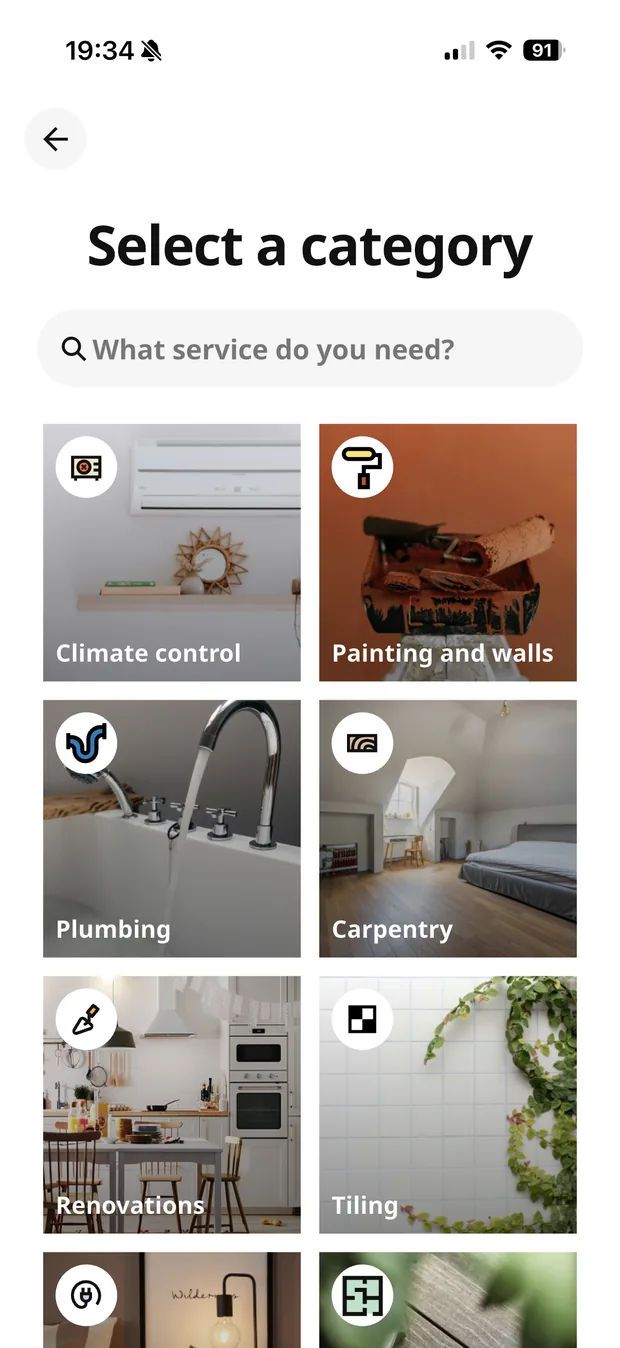
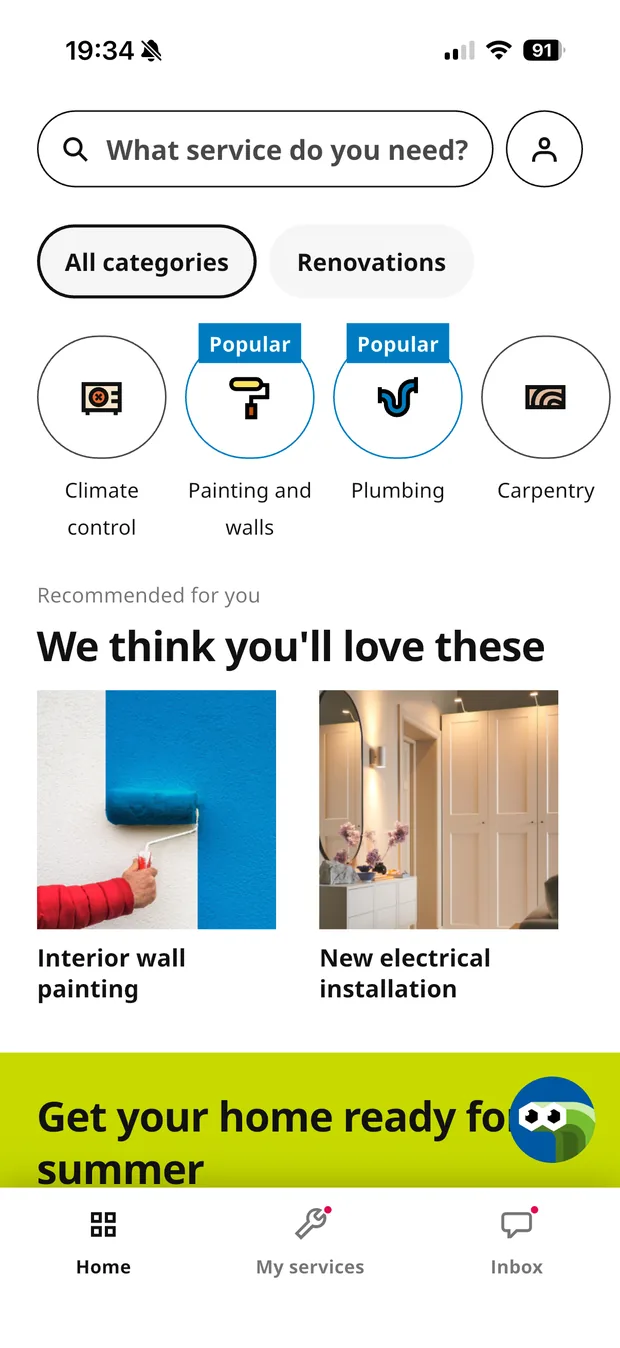
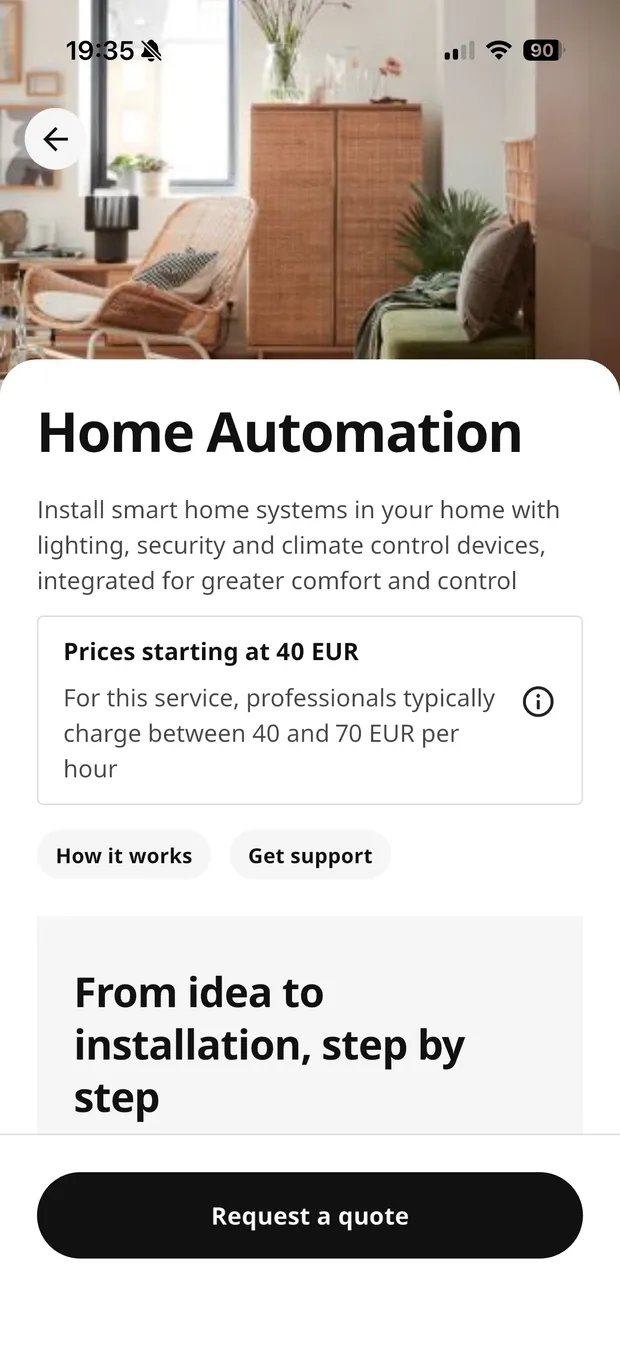
Extending IKEA beyond furniture
IKEA's New Business Platform is an internal startup unit within Ingka Group, tasked with expanding the brand into adjacent markets across Europe. The ambition was clear: if you've just bought a flat-pack wardrobe, you probably need someone to help you put it up. And IKEA wanted to be the one to connect you.
IKEA Home Services is the result: a peer-to-peer marketplace connecting homeowners with vetted, reviewed professionals across more than 50 home improvement and assembly categories. It launched in Madrid in September 2024, reached Barcelona a year later, and expanded to seven Spanish regions by May 2026, including renovation services added in March 2026.
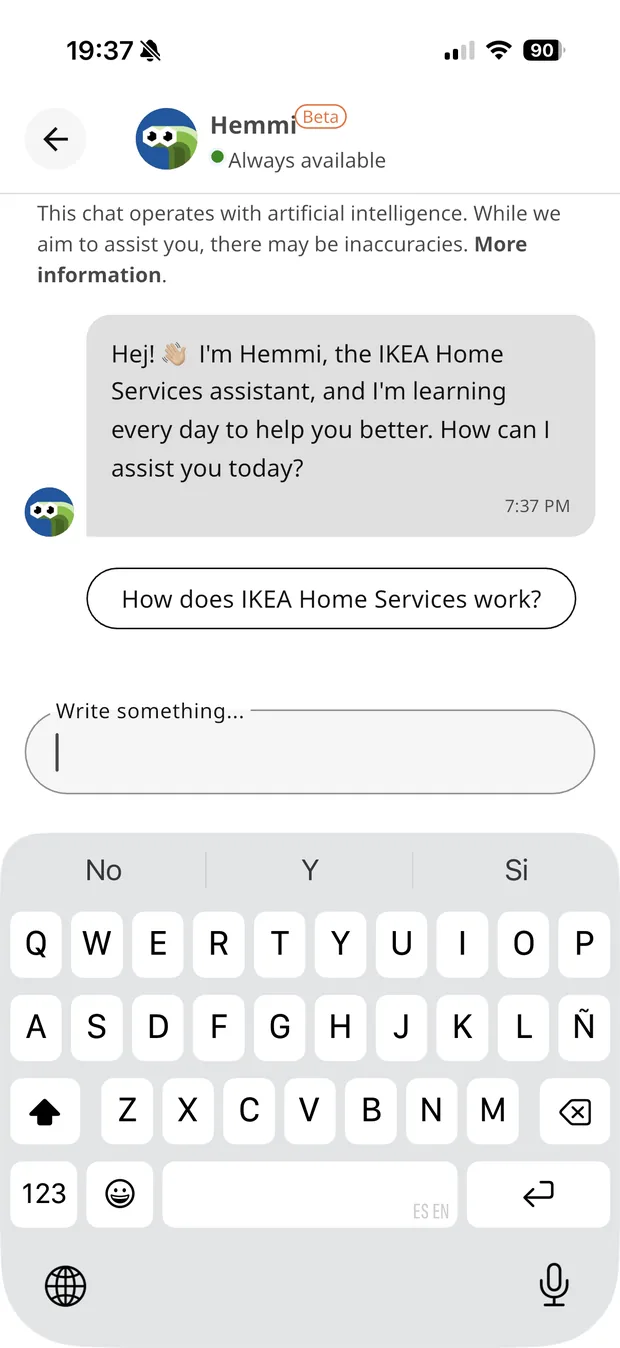
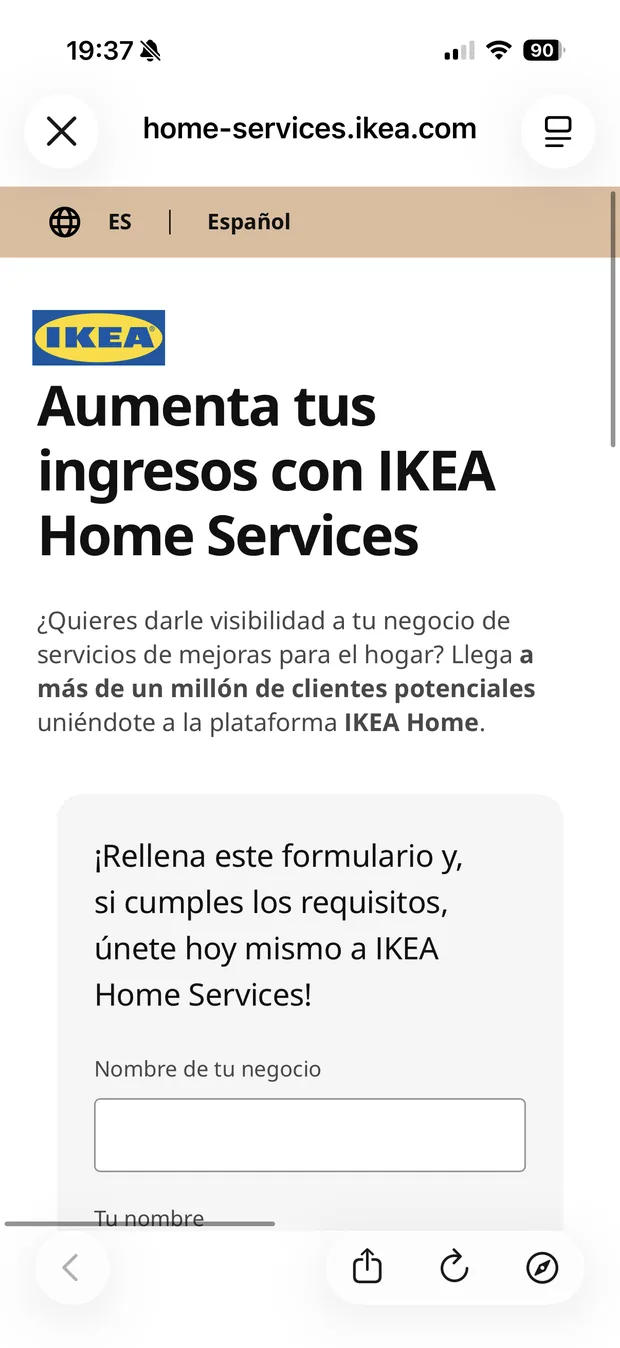
Trust, consistency, and speed
Marketplace products live or die on trust. Homeowners need to trust the professionals they're letting into their homes. Professionals need to trust that the platform is worth their time. And IKEA needs the product to feel like IKEA: considered, reliable, without friction.
The additional complexity: we were building a new product inside a very large, brand-sensitive organisation, working with multiple stakeholders across product, service design, engineering, content, and the in-store IKEA network. Decisions had to be made at pace, but they had to hold up to scrutiny. The brief was never fully stable.
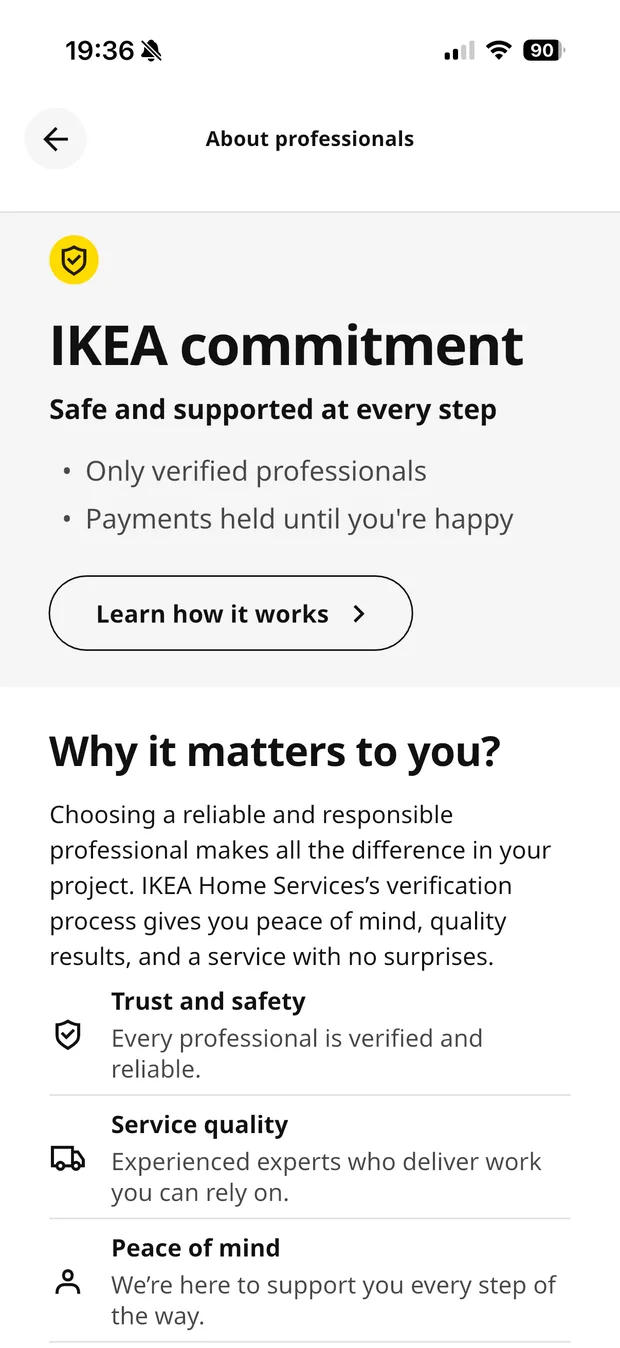
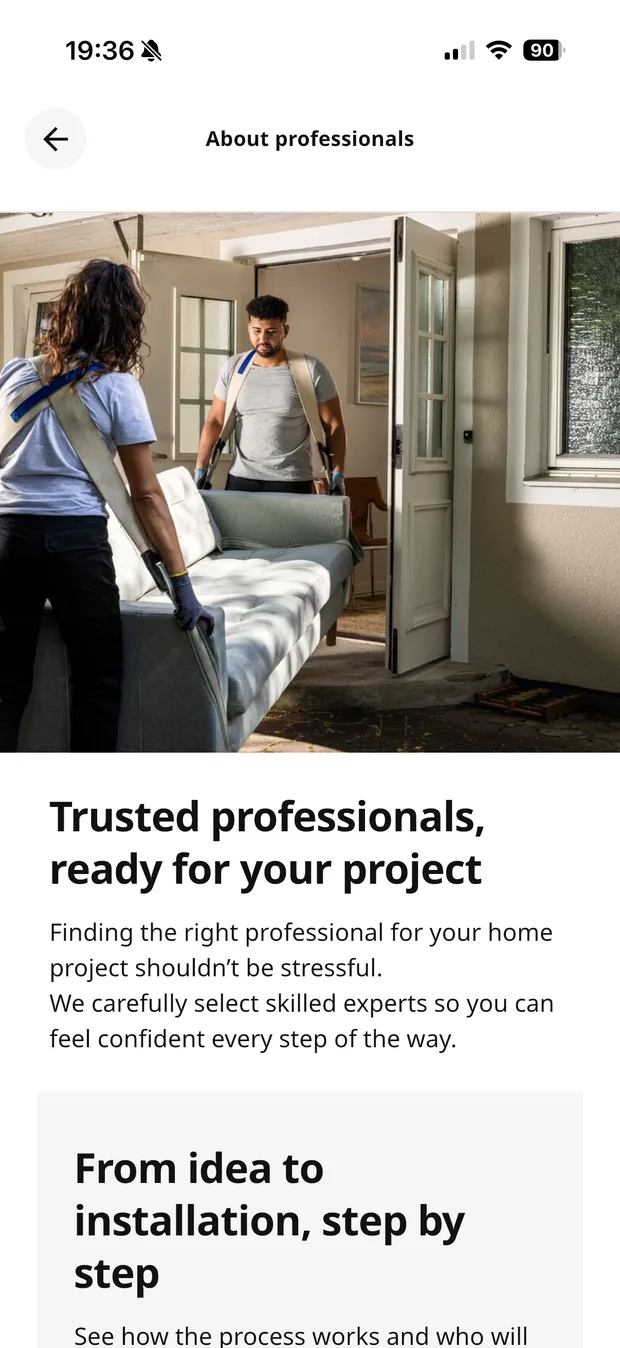
Rather than leaving credibility implicit, IKEA's commitment is stated plainly at the point of decision: verified professionals, backed by the brand, with recourse if something goes wrong.
Embedded, end-to-end
I work as a Senior Product Designer embedded full-time within the IKEA New Business Platform team. That means I'm not consulting from the outside; I'm inside the product team, alongside product owners, service designers, engineers, content designers, and business developers.
My work spans user flows, interaction design, high-fidelity prototyping, in-store user research sessions at IKEA locations, accessibility auditing (WCAG compliance), and design handoff. I contribute to product decisions, not just design delivery.
Research first, iteration always
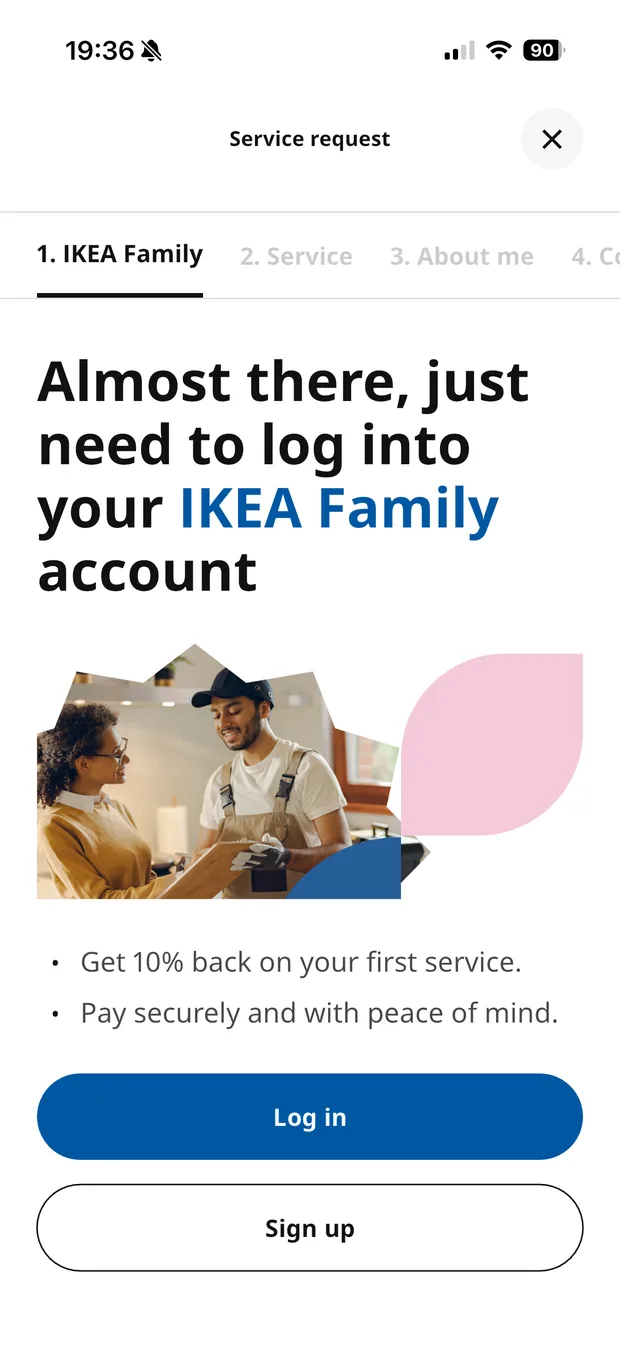
We ran user research sessions inside IKEA stores: recruiting participants on-site and testing flows in context, with the app running on real devices. This gave us faster signal than remote testing and was consistent with the product's natural discovery channel.
The design process was iterative by necessity. A marketplace has two distinct user types, homeowners and service professionals, each with different mental models and success criteria. We mapped flows for both sides separately before working on the points of intersection: booking, confirmation, dispute resolution, and review mechanics.
Accessibility was treated as a requirement from day one, not an audit at the end. The product had to meet IKEA's own accessibility standards alongside WCAG AA, across iOS and Android.
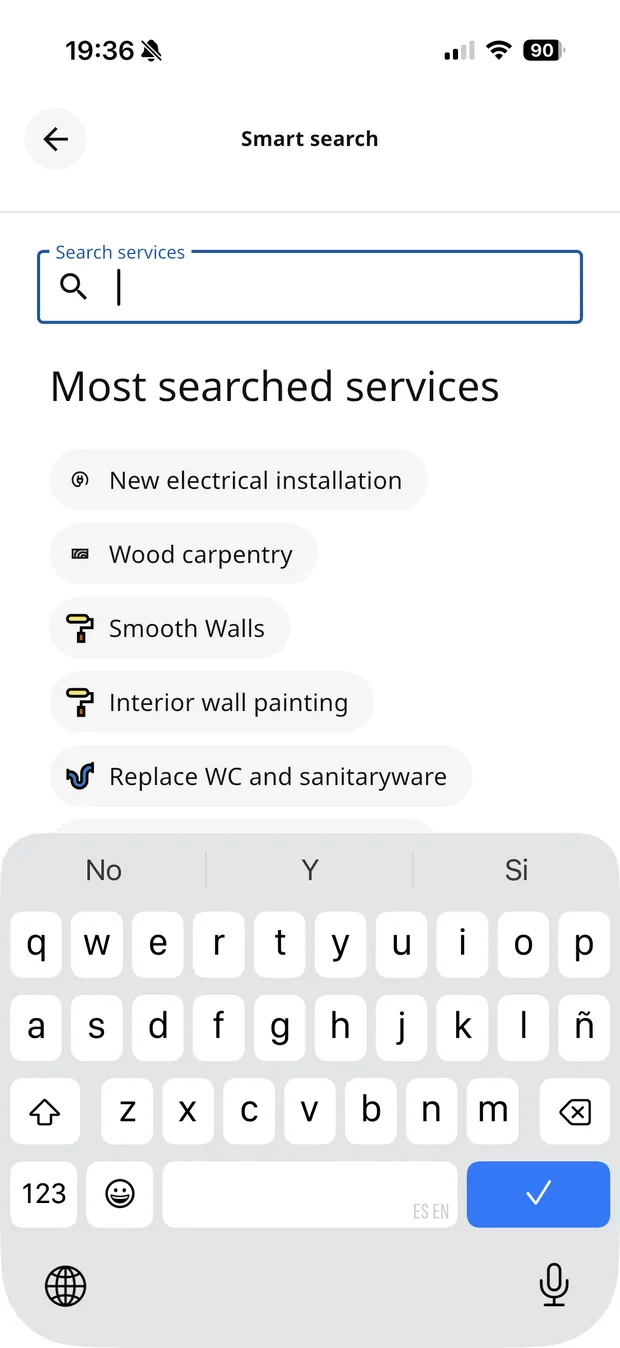
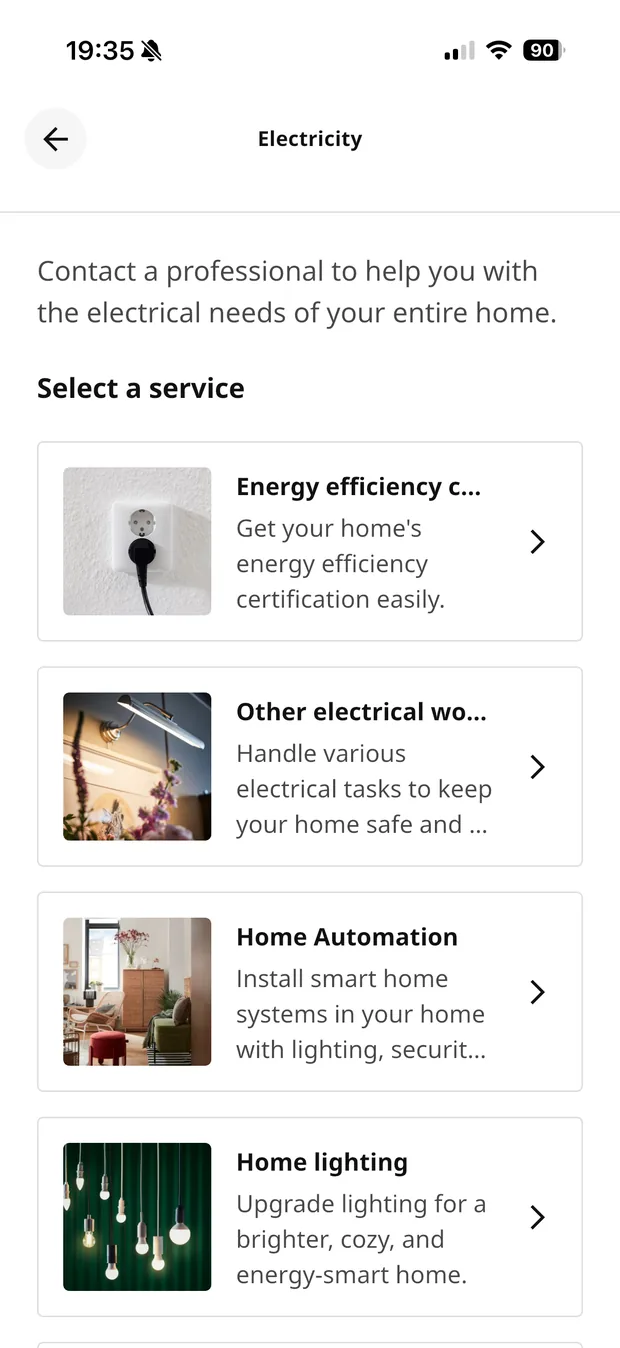
Strong adoption from launch
These are published figures from Ingka Group. The product launched in Madrid in September 2024 and has since expanded to seven Spanish regions as of May 2026, with continued growth in progress.
What building inside a large brand teaches you
Being embedded inside IKEA's team has confirmed something for me: the design itself is rarely the hard part. Keeping a coherent direction while stakeholder priorities shift, the roadmap moves, and people rotate on and off the team. That's the actual job. Fighting that instability is a losing battle. Building systems that can absorb it isn't.
This project also sharpened how I think about trust in a marketplace. Visual polish and a smooth onboarding flow barely register next to things like how a professional's credentials get displayed, what happens on screen when a booking goes wrong, or the exact wording of a review prompt. Nobody labels those as "design decisions," but that's exactly what they are, and they carry most of the weight.
Your hardest problem
is a good place to start.
Open to senior product design roles and selective consulting engagements, in English or Spanish.